Educeri
  • Curriculum
  • Lessons
  • How to Teach
  • Professional Development
  • Log In
  • Subscribe

Determine Fractions of a Whole

85 people have favorited this lesson!

Share

Determine Fractions of a Whole

TEKS Math: 3.3.C

(C) Explain that the unit fraction 1/b represents the quantity formed by one part of a whole that has been partitioned into b equal parts where b is a non-zero whole number

AU Math: ACMNA058

(Y3) Model and represent unit fractions including 1/2, 1/4, 1/3, 1/5 and their multiples to a complete whole (ACMNA058)

CCSS Math: 3.NF.1

3.NF.1 Understand a fraction 1/b as the quantity formed by 1 part when a whole is partitioned into b equal parts; understand a fraction a/b as the quantity formed by a parts of size 1/b.

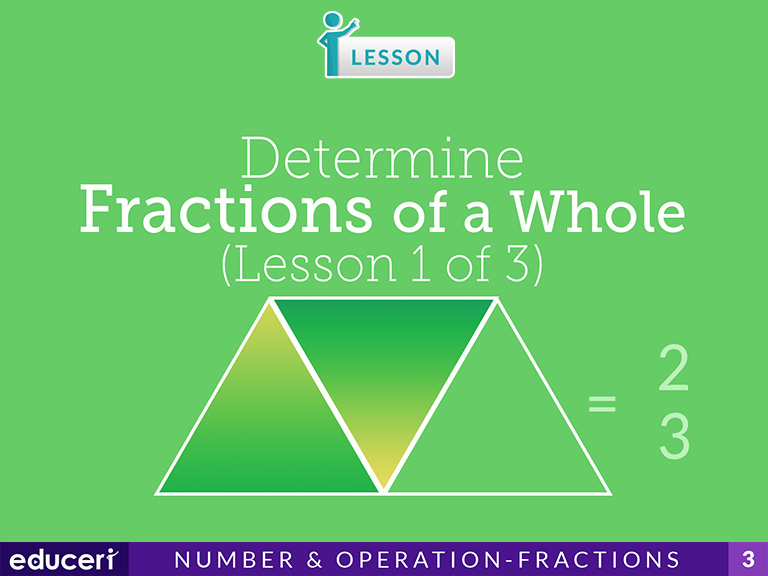
This numbers and operations − fractions lesson covers how to determine fractions of a whole. The lesson includes research-based strategies and strategic questions that prepare students for assessments. In this lesson, students will read the problem and identify the selected part. Then, they will write the unit fraction of the whole, determine the fraction of the whole by counting selected unit fractions, and interpret the result.

Share This Lesson


Log in to view this lesson. If you do not have an account, subscribe now and begin your free 30 day trial.

Standard Alignments:

TEKS Math: 3.3.C

(C) Explain that the unit fraction 1/b represents the quantity formed by one part of a whole that has been partitioned into b equal parts where b is a non-zero whole number

AU Math: ACMNA058

(Y3) Model and represent unit fractions including 1/2, 1/4, 1/3, 1/5 and their multiples to a complete whole (ACMNA058)

CCSS Math: 3.NF.1

3.NF.1 Understand a fraction 1/b as the quantity formed by 1 part when a whole is partitioned into b equal parts; understand a fraction a/b as the quantity formed by a parts of size 1/b.


Log in to view this lesson. If you do not have an account, subscribe now and begin your free 30 day trial.

Quiz has been requested!

Please wait for good news!

Educeri A product of DataWORKS Educational Research


Terms & Conditions Privacy
> >