I am a teacher or individual opening a personal account.
I am a school or district representative opening an account for my school or district.
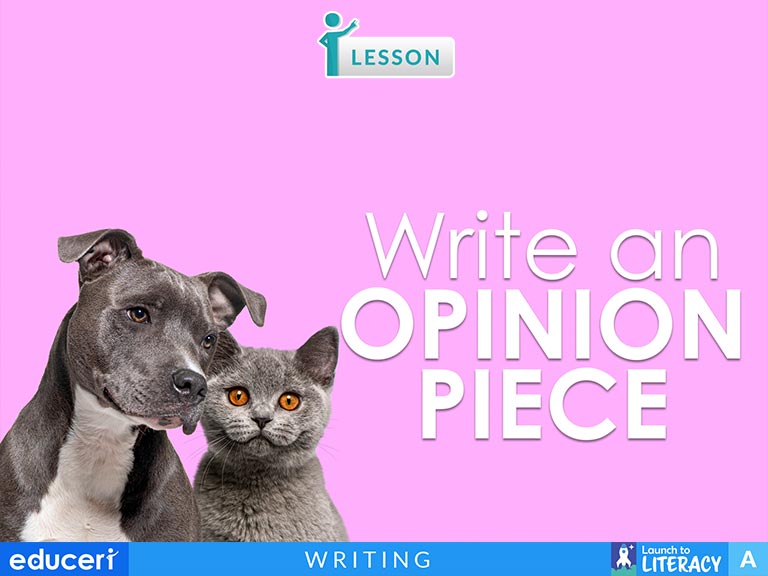
K.S4.B-1 Express an opinion or preference and limited justification about a familiar topic or story.
K.S4.I-1 Express an opinion or preference using appropriate structure and justification about a variety of topics or stories.
1.S4.B-2 Identify and use phrases that signal closure.
2-3.S3.B-4 Produce writing with appropriate organization on a variety of topics, experiences, or events using sentence frames.
(F) Use interaction skills including listening while others speak, using appropriate voice levels, articulation and body language, gestures and eye contact (ACELY1784)
PI.A.C.1.EMG (C.1 Exchanging information/ideas) Contribute to conversations and express ideas by asking and answering yes no and wh- questions and responding using short phrases.
K.S5.PE/E-1 Respond to questions and suggestions from peers and add details to writing.
K.S6.PE/E-2 Follow some rules for discussion about familiar topics.
SL.K.6 Speak audibly and express thoughts, feelings, and ideas clearly.
K(1)(D) Work collaboratively with others by following agreed-upon rules for discussion, including taking turns.
K.S3.PE/E-1 Communicate simple information or feelings about familiar topics, experiences, or events.
K.S9.PE/E-1 Express feelings about an event or a familiar story using a limited number of words.
PI.B.I.5.EMG (I.5 Listening actively) Demonstrate active listening to read?alouds and oral presentations by asking and answering basic questions, with prompting and substantial support.
K.S5.PE/E-2 Demonstrate a developing awareness of the difference between appropriate language for the playground and language for the classroom.
K.S6.PE/E-1 Participate in short conversations about familiar topics.
SL.K.1 Participate in collaborative conversations with diverse partners about kindergarten topics and texts with peers and adults in small and larger groups.
PI.A.C.1.EXP (C.1 Exchanging information/ideas)Contribute to class, group, and partner discussions, including sustained dialogue, by following turn taking rules, asking relevant questions, affirming others, and adding relevant information.
1.S5.B-2 Demonstrate awareness of differences between informal playground speech and language appropriate to the classroom.
SL.1.1.A Follow agreed-upon rules for discussions (e.g., listening to others with care, speaking one at a time about the topics and texts under discussion).
1.S5.B-1 Respond to questions and suggestions from peers and add details to strengthen writing as needed.
SL.1.1 Participate in collaborative conversations with diverse partners about grade 1 topics and texts with peers and adults in small and larger groups.
1.S3.B-1 Communicate simple messages about a variety of topics, experiences, or events.
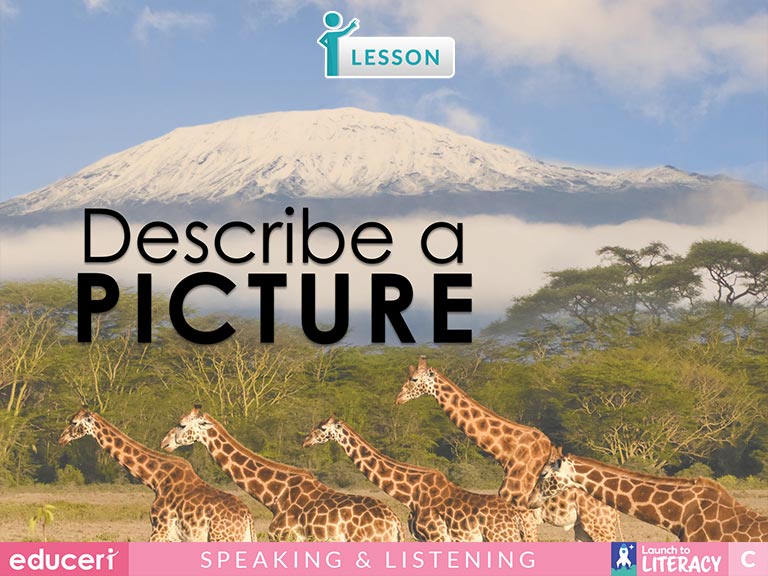
SL.1.4 Describe people, places, things, and events with relevant details, expressing ideas and feelings clearly.
PI.B.I.5.EXP (I.5 Listening actively) Demonstrate active listening to read?alouds and oral presentations by asking and answering detailed questions, with occasional prompting and moderate support.
PI.B.I.6.EXP (I.6 Reading/viewing closely) Describe ideas, phenomena (e.g., how cows digest food), and text elements (e.g., main idea, characters, events) in greater detail based on understanding of a variety of grade-level texts and viewing of multimedia, with moderate support.
(Y1) Use interaction skills including turn-taking, recognising the contributions of others, speaking clearly and using appropriate volume and pace (ACELY1788)
PI.A.C.1.BRI (C.1 Exchanging information/ideas) Contribute to class, group, and partner discussions, including sustained dialogue, by following turn taking rules, asking relevant questions, affirming others, adding relevant information, building on responses, and providing useful feedback.
2-3.S6.B-1 Participate in discussions about familiar topics and texts.
SL.2.1.A Follow agreed-upon rules for discussions (e.g., gaining the floor in respectful ways, listening to others with care, speaking one at a time about the topics and texts under discussion).
PI.B.I.5.BRI (I.5 Listening actively) Demonstrate active listening to read?alouds and oral presentations by asking and answering detailed questions, with minimal prompting and light support.
SL.2.1 Participate in collaborative conversations with diverse partners about grade 2 topics and texts with peers and adults in small and larger groups.
2-3.S3.B-1 Deliver short oral presentations that include some details to develop a topic.
(Y2) Use comprehension strategies to build literal and inferred meaning and begin to analyse texts by drawing on growing knowledge of context, language and visual features and print and multimodal text structures (ACELY1670)
PI.B.I.6.BRI (I.6 Reading/viewing closely) Describe ideas, phenomena (e.g., volcanic eruptions), and text elements (e.g., central message, character traits, major events) using key details based on understanding of a variety of grade level texts and viewing of multimedia, with light support.
SL.2.4 Tell a story or recount an experience with appropriate facts and relevant, descriptive details, speaking audibly in coherent sentences.
1(3)(B) Use illustrations and texts the student is able to read or hear to learn or clarify word meanings.
K.S1.PE/E-1 Answer questions about one or more details from a read-aloud, picture book, and oral presentation.
K.S5.I-1 Respond to questions and suggestions from peers and add details to strengthen writing as needed.
1.S7.B-2 Respond to a question or problem based on gathered information from provided source.