
All Lessons
Recognize Uppercase and Lowercase Letters
Share This Lesson
Identify Characters in a Story
This reading comprehension lesson focuses on identifying characters in a narrative story. The lesson is intended to be taught as a read-aloud, with Independent Practice and Periodic Reviews to be teacher guided. The lesson includes research-based strategies and strategic questions that prepare students for assessments.
Share This Lesson
Identify the Setting of a Story
Share This Lesson
Distinguish Fantasy Text from Realistic Text
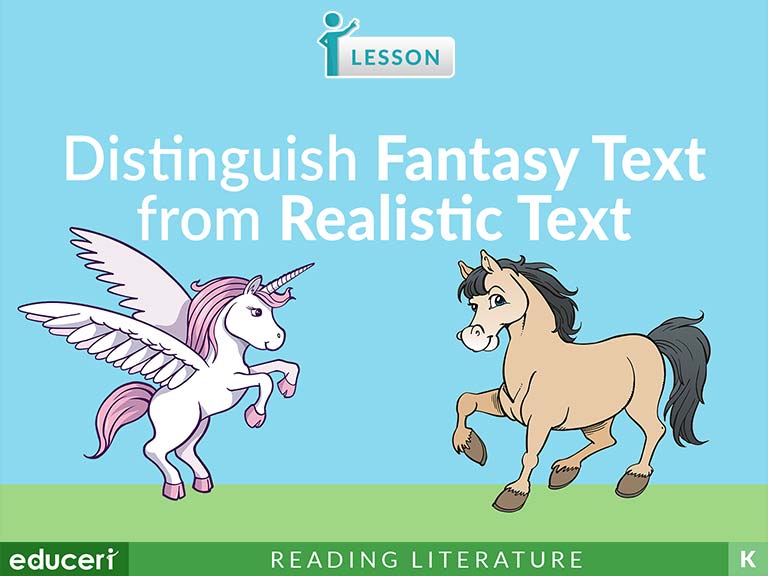
This literary response and analysis lesson covers the distinction between fantasy and realistic text. The lesson includes research-based strategies and strategic questions that prepare students for assessments. In this lesson, students will distinguish if the text is fantasy or realistic, based on whether an event can happen in real life or not. In addition to the lesson, there are eight pages of Independent Practice and review with questions modeled after current adaptive testing items.
Share This Lesson
Identify Major Events in a Story
Share This Lesson
Share This Lesson
Follow Words on a Page
Share This Lesson
Recognize Types of Texts (Stories & Informational Text)
(F) Understand that texts can take many forms, can be very short (for example an exit sign) or quite long (for example an information book or a film) and that stories and informative texts have different purposes (ACELA1430)
ACELY1658(Y1) Describe some differences between imaginative informative and persuasive texts (ACELY1658)
Share This Lesson
Retell Stories in Order
Share This Lesson
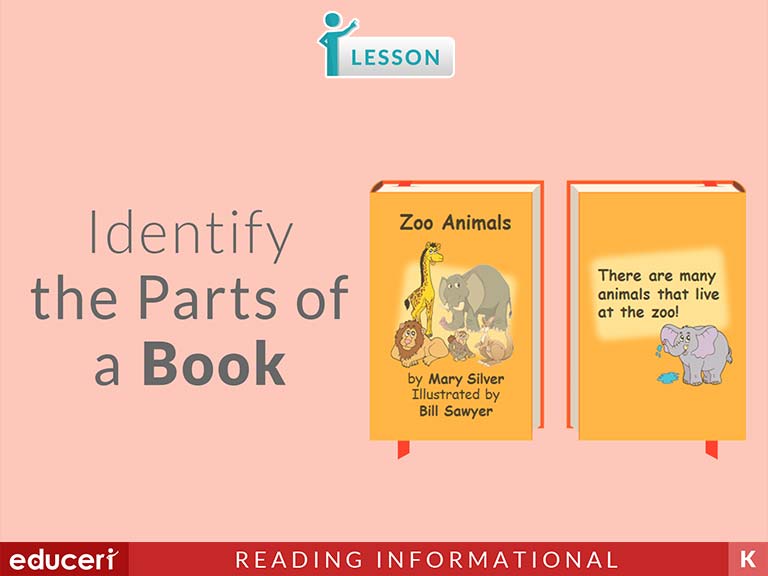
Identify the Parts of a Book
This craft and structure lesson is focused on identifying parts of a book. The lesson includes research-based strategies and strategic questions that prepare students for assessments. In this lesson, students will identify the different parts of a book, including author and/or illustrator. In addition to the lesson, there are multiple pages of independent practice and review. Consider incorporating actual books from around the classroom. This will give you more of a variety of what the students will see.
Share This Lesson
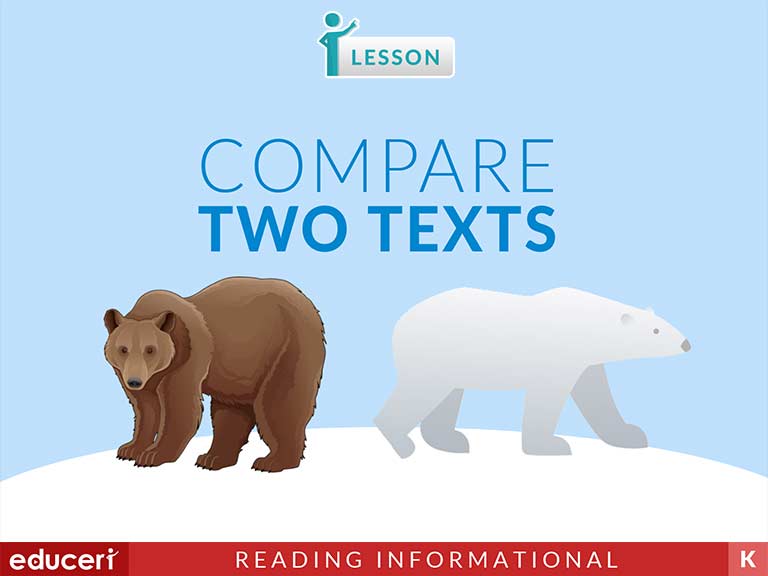
Share This Lesson
Identify the Main Topic
Share This Lesson
Answer Questions About Text
Share This Lesson
Retell Details of a Text
Share This Lesson
Identify Parts of a Book
Share This Lesson
Ask Who and Where Questions about Text
K.S1.B-1 Ask questions about key details from a read-aloud, picture book, and oral presentation.
K.S6.I-3K.S6.I-3 Ask and answer questions about a variety of grade-appropriate topics.
K.S10.I-2K.S10.I-2 Ask and answer interrogatives (wh-questions) in shared language activities.
Share This Lesson
Share This Lesson
Write About an Experience
W.K.3 Use a combination of drawing, dictating, and writing to narrate a single event or several loosely linked events, tell about the events in the order in which they occurred, and provide a reaction to what happened.
W.K.8W.K.8 With guidance and support from adults, recall information from experiences or gather information from provided sources to answer a question.
This writing strategies lesson focuses on writing about an experience. The lesson includes research-based strategies and strategic questions that prepare students for assessments. In this lesson, the teacher reads an experience, then asks students to write about a similar experience that happened to them. They can draw a picture of the experience to help them remember. In addition to the lesson, there are four pages of Independent Practice and review.
Share This Lesson
Share This Lesson
Write About an Experience
(F) Recognise that texts are created by authors who tell stories and share experiences that may be similar or different to students’ own experiences (ACELT1575)
ACELT1596(Y3) Draw connections between personal experiences and the worlds of texts, and share responses with others (ACELT1596)