All Lessons
Represent Objects from 0 to 10
Share This Lesson
Write Numbers From 11 to 20
Share This Lesson
Count Objects (1-5)
(F) Connect number names, numerals and quantities, including zero, initially up to 10 and then beyond (ACMNA002)
ACMNA003(F) Subitise small collections of objects (ACMNA003)
K.CC.4 Understand the relationship between numbers and quantities; connect counting to cardinality.
K.CC.5K.CC.5 Count to answer "how many?" questions about as many as 20 things arranged in a line, a rectangular array, or a circle, or as many as 10 things in a scattered configuration; given a number from 1-20, count out that many objects.
Share This Lesson
Order Numbers (1-5)
Share This Lesson
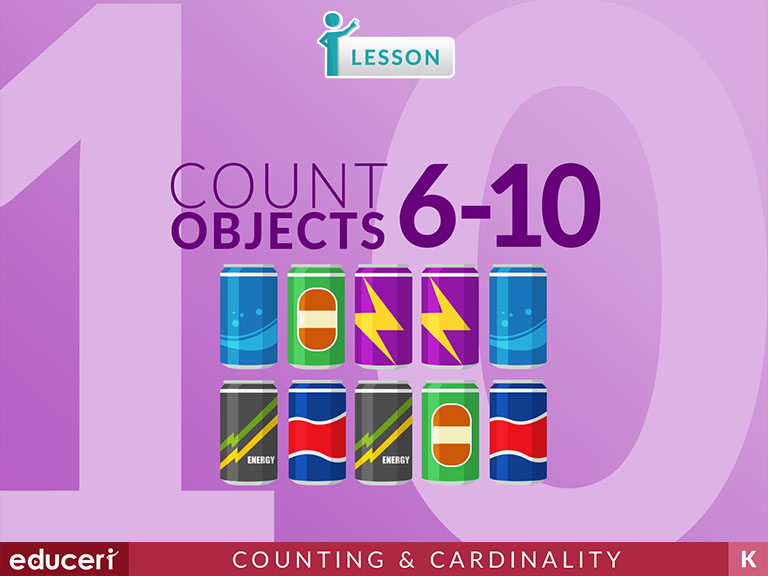
Count Objects (6-10)
(F) Connect number names, numerals and quantities, including zero, initially up to 10 and then beyond (ACMNA002)
ACMNA003(F) Subitise small collections of objects (ACMNA003)
K.CC.4 Understand the relationship between numbers and quantities; connect counting to cardinality.
K.CC.5K.CC.5 Count to answer "how many?" questions about as many as 20 things arranged in a line, a rectangular array, or a circle, or as many as 10 things in a scattered configuration; given a number from 1-20, count out that many objects.
Share This Lesson
Order Numbers (6-10)
Share This Lesson
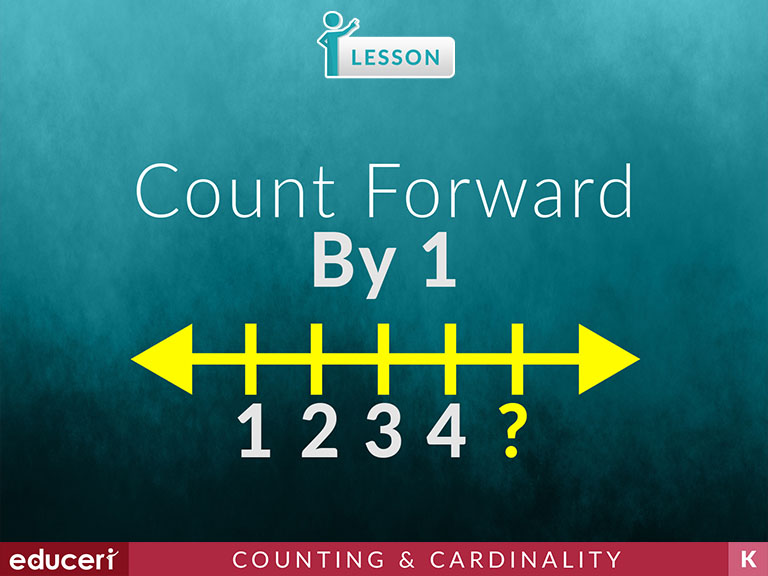
Count Forward by 1
Share This Lesson

Represent a Number of Objects (11-20)
Share This Lesson
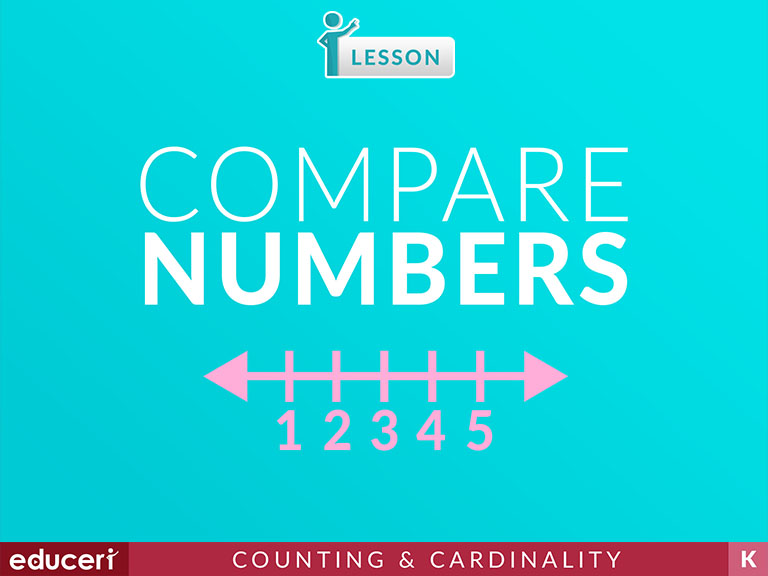
Compare Numbers (1-5)
Share This Lesson
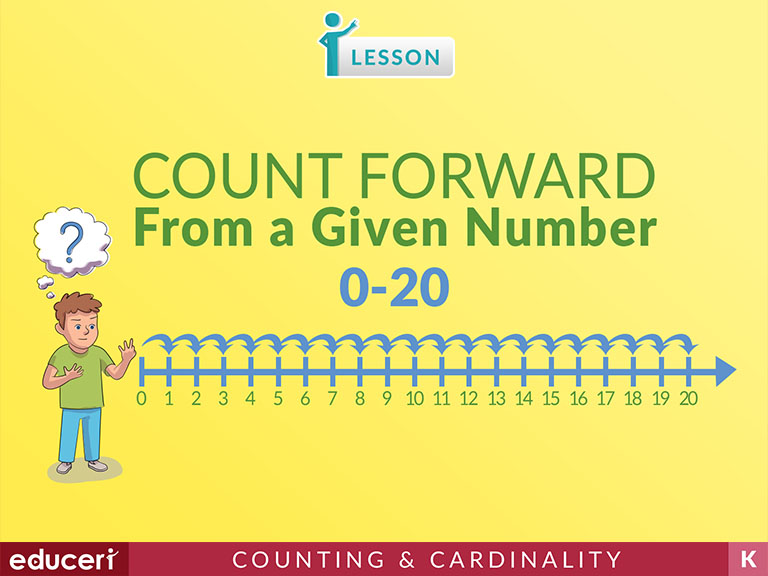
Count Forward From a Given Number
Share This Lesson
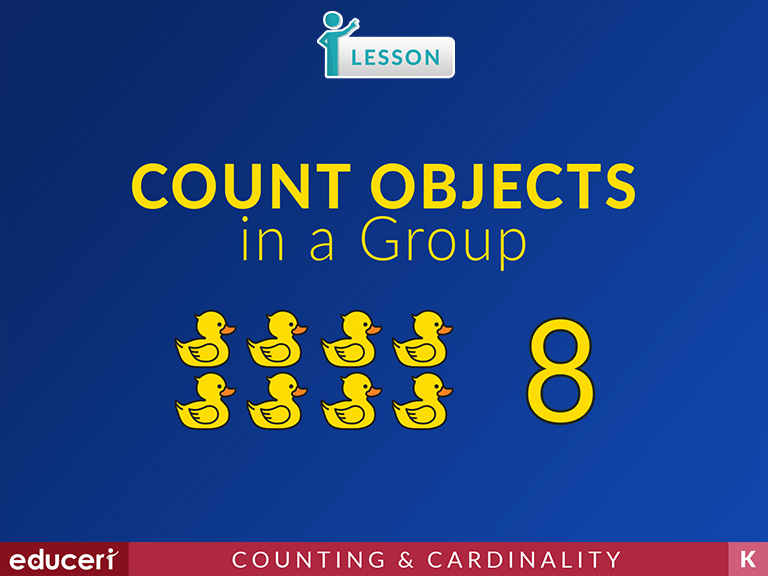
Count Objects in a Group
Share This Lesson
Flashcards Produce Complete Sentences
Share This Lesson
Share This Lesson
Share This Lesson
Capitalize the Word I
Share This Lesson
Capitalize the First Letter of a Sentence
Share This Lesson
Identify Ending Punctuation
Share This Lesson
Sort Objects into Categories
Share This Lesson
Read Words with Inflections
RF.K.3.A Demonstrate basic knowledge of one-to-one letter-sound correspondences by producing the primary sound or many of the most frequent sounds for each consonant.
L.K.4.BL.K.4.B Use the most frequently occurring inflections and affixes (e.g., -ed, -s, re-, un-, pre-, -ful, -less) as a clue to the meaning of an unknown word.
Share This Lesson