
All Lessons
Draw Conclusions
- Grade:
- 5
- Subject:
- English Language Arts
This reading comprehension lesson focuses on drawing conclusions from a text. The lesson includes research-based strategies and strategic questions that prepare students for assessments. In this lesson, students read the question identifying the topic. Then, they underline evidence in the text that may lead to a conclusion about the topic. Finally, they choose one of four conclusions and then justify it. In addition to the lesson, there are four pages of Independent Practice and review with questions modeled after current adaptive testing items.
Distinguish Between Fact and Opinion
- Grade:
- 5
- Subject:
- English Language Arts
This reading comprehension lesson focuses on distinguishing between fact and opinion. The lesson includes research-based strategies and strategic questions that prepare students for assessments. In this lesson, students read each sentence and distinguish if it is a fact or an opinion. Then, they have to defend their answer in writing. In addition to the lesson, there are four pages of Independent Practice and review with questions modeled after current adaptive testing items.
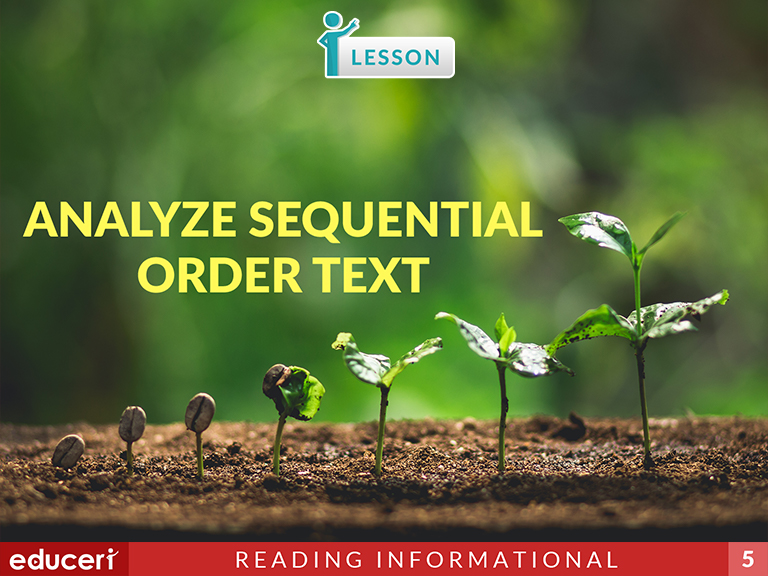
Analyze Sequential Order in Text
- Grade:
- 5
- Subject:
- English Language Arts
This reading comprehension lesson focuses on analyzing text that is in sequential order. The lesson includes research-based strategies and strategic questions that prepare students for assessments. In this lesson, students answer in complete sentences a series of questions about the sequential order of the text. Their answers must reference clue words in the text. In addition to the lesson, there are eight pages of Independent Practice and review with questions modeled after current adaptive testing items.
Make Generalizations About Text
- Grade:
- 5
- Subject:
- English Language Arts
This reading comprehension lesson focuses on making generalizations from a text. The lesson includes research-based strategies and strategic questions that prepare students for assessments. In this lesson, students read the question identifying the topic. Then, they identify common traits or features in the text that may lead to a generalization about the topic. Finally, they make a generalization and then justify it. In addition to the lesson, there are four pages of Independent Practice and review with questions modeled after current adaptive testing items.
Determine Cause-and-Effect Relationships
- Grade:
- 5
- Subject:
- English Language Arts
This reading comprehension lesson focuses on distinguishing between cause and effect. The lesson includes research-based strategies and strategic questions that prepare students for assessments. In this lesson, students use clues from the text they read, as well as prior knowledge to determine which event is the cause and which is the effect. In addition to the lesson, there are four pages of Independent Practice and review with questions modeled after current adaptive testing items.
Analyze Compare-and-Contrast Text Organization
- Grade:
- 5
- Subject:
- English Language Arts
This reading comprehension lesson focuses on analyzing text that uses the compare-and-contrast organizational pattern. The lesson includes research-based strategies and strategic questions that prepare students for assessments. In this lesson, students use a graphic organizer to sort details from a passage to determine if they are comparing or contrasting information from the passage. In addition to the lesson, there are four pages of Independent Practice and review with questions modeled after current adaptive testing items.
Determine the Figurative Meaning of Words & Phrases (Reports)
- Grade:
- 5
- Subject:
- English Language Arts
Revise Writing (Add & Delete Sentences)
- Grade:
- 5
- Subject:
- English Language Arts
This writing lesson covers how to revise writing by adding or deleting sentences based on how they support the main idea. The lesson includes research-based strategies and strategic questions that prepare students for assessments. In this lesson, students will learn how to change the written text to improve it by determining which details support the main idea and which don’t.
Write a Narrative (Multi-Paragraph Composition)
- Grade:
- 5
- Subject:
- English Language Arts
This writing strategies lesson focuses on writing a multi-paragraph narrative composition. The lesson includes research-based strategies and strategic questions that prepare students for assessments. In this lesson, students create a graphic organizer that describes the introduction, the body, and the conclusion of their composition based on a given prompt. Then, they use the organizer to write a four-paragraph composition. In addition to the lesson, there are eleven pages of Independent Practice and review with prompts and organizers provided.
Write a Concluding Paragraph for Expository Text
- Grade:
- 5
- Subject:
- English Language Arts
This writing strategies lesson focuses on writing a concluding paragraph for expository text. The lesson includes research-based strategies and strategic questions that prepare students for assessments. In this lesson, students read the text, noting the bold main idea and the underlined important details. Then in complete sentences, they re-word the main idea and important details as well as develop a lasting impression by asking why the main idea is important. Finally, they write a concluding paragraph. In addition to the lesson, there are four pages of Independent Practice and review with text and organizers provided.
Revise Writing
- Grade:
- 5
- Subject:
- English Language Arts
This writing strategies lesson focuses on identifying an effective transition between paragraphs. The lesson includes research-based strategies and strategic questions that prepare students for assessments. In this lesson, students read the question to determine what they are looking for in the text. Then they read both paragraph of the passage and identify the main idea of each one. Finally, they identify the best transition between paragraphs -- the sentence that combines the main ideas of both. In addition to the lesson, there are four pages of Independent Practice and review with questions modeled after current adaptive test items.
Revise Writing by Consolidating Sentences
- Grade:
- 5
- Subject:
- English Language Arts
This writing strategies lesson focuses on revising writing by consolidating sentences. The lesson includes research-based strategies and strategic questions that prepare students for assessments. In this lesson, students read a pair of sentences, and identify the relationship between them. Then, they revise the writing by consolidating the sentences using a coordinating conjunction. In addition to the lesson, there are four pages of Independent Practice and review with questions modeled after current adaptive test items.
Plan and Write an Opinion Piece
- Grade:
- 5
- Subject:
- English Language Arts
This writing lesson covers how to plan an opinion piece. The lesson includes research-based strategies and strategic questions that prepare students for assessments. In this lesson, students read the prompt and decide their position about it. Then they organize their ideas in a planning chart by answering questions about their position and three reasons for it. They make sure their reasons appeal to the audience by using pronouns and modal verbs. They also restate their position for a summary. In addition to the lesson, there are four pages of new topics for review.