Lessons tagged with "author"
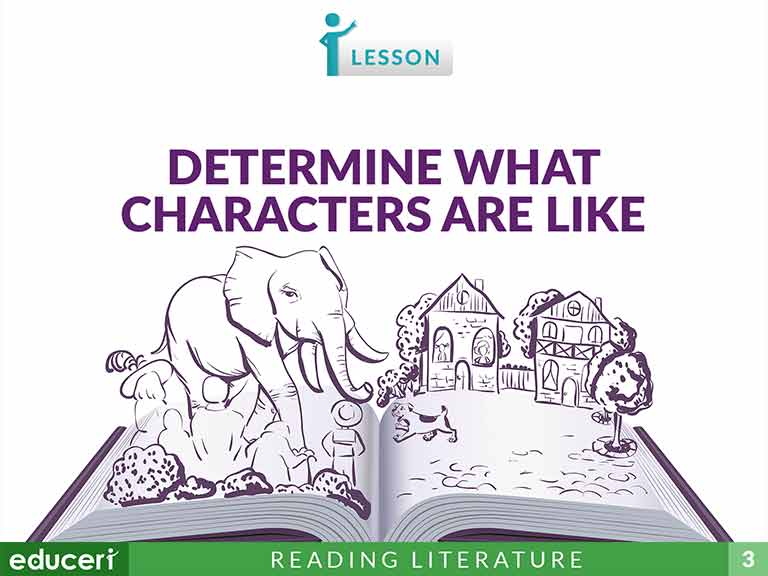
Determine What Characters are Like
- Grade:
- 3
- Subject:
- English Language Arts
This literary response and analysis lesson focuses on determining what characters are like by how the author and illustrator portray them. The lesson includes research-based strategies and strategic questions that prepare students for assessments. In this lesson, students use the written words of an author and the details in an illustration by an illustrator to determine what characters are like. In addition to the lesson, there are four pages of Independent Practice and review with questions modeled after current adaptive testing items.
Identify the Author's Point of View
- Grade:
- 4
- Subject:
- English Language Arts
This reading informational text lesson has students identify the author's beliefs about the topic in a text.
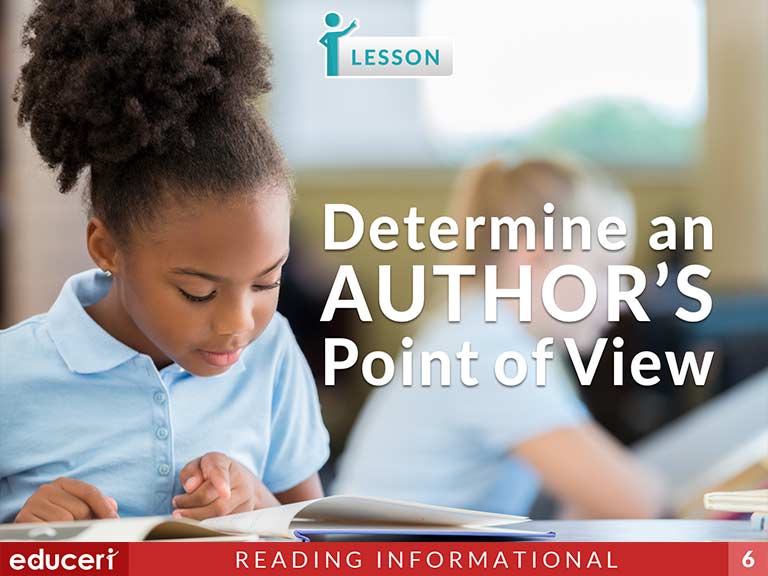
Determine an Author's Point of View
- Grade:
- 6
- Subject:
- English Language Arts
This reading informational text lesson covers how to determine an author’s point of view. The lesson includes research-based strategies and strategic questions that prepare students for assessments. In this lesson, students will identify words or details in the text that convey the author’s point of view on a topic. Then, they will write a brief explanation justifying their understanding.
Trace & Evaluate an Author's Argument
- Grade:
- 7
- Subject:
- English Language Arts
This reading informational text lesson covers how to trace and evaluate an author’s argument in informational text. The lesson includes research-based strategies and strategic questions that prepare students for assessments. In this lesson, students identify the author’s claims and determine if each claim is supported by relevant evidence. A final judgment is made on whether the argument has sound reasoning.

Identify the Author's Point of View
- Grade:
- 7
- Subject:
- English Language Arts
This reading comprehension lesson focuses on identifying an authors point of view. The lesson includes research-based strategies and strategic questions that prepare students for assessments. In this lesson, students read the passage to determine the author's point of view. Then, they go back to the text to identify supporting details that help develop the author's point of view. In addition to the lesson, there are four pages of Independent Practice and review with questions modeled after current adaptive testing items.

Use Varied Sentence Openings
- Grade:
- 8
- Subject:
- English Language Arts
This writing conventions lesson focuses on using varied sentence openings. The lesson includes research-based strategies and strategic questions that prepare students for assessments. In this lesson, students read the passage and identify sentences that are repetitive. Then, they vary sentence opening by rewriting repetitive sentences using common sentence openings such as an -ly word, -ing phrase, or prepositional phrase. Finally, they answer questions about the personal style of the author that reflects on other sentence opening options. In addition to the lesson, there are four pages of Independent Practice and review modeled on current adaptive testing methods.
Determine and Analyze an Author's Point of View
- Grade:
- 8
- Subject:
- English Language Arts
This reading comprehension lesson focuses on identifying an authors point of view. The lesson includes research-based strategies and strategic questions that prepare students for assessments. In this lesson, students read the passage to determine the author's point of view. Then, they go back to the text to identify supporting details that help develop the author's point of view. In addition to the lesson, there are four pages of Independent Practice and review with questions modeled after current adaptive testing items.
Analyze How an Author Acknowledges Conflicting Evidence or Viewpoints
- Grade:
- 8
- Subject:
- English Language Arts
This reading informational text lesson covers how an author deals with conflicting viewpoints in a text. The lesson includes research-based strategies and strategic questions that prepare students for assessments. In this lesson, students will identify the author's point of view and analyze how he or she acknowledges or responds to conflicting viewpoints.
Analyze How an Author Uses Rhetoric to Advance a Point of View
- Grade:
- High School, High School 11-12
- Subject:
- English Language Arts
Analyze how Authors Manipulate Time to Affect Mood
- Grade:
- High School, High School 9-10
- Subject:
- English Language Arts
Analyze How an Author Uses Rhetoric to Advance Point of View
- Grade:
- High School, High School 9-10
- Subject:
- English Language Arts
Analyze how an Author's Ideas are Developed and Refined
- Grade:
- High School, High School 9-10
- Subject:
- English Language Arts
Analyze How an Author Uses Rhetoric to Advance a Point of View
- Grade:
- High School, High School 11-12
- Subject:
- English Language Arts
Analyze how an Author's Ideas are Developed and Refined
- Grade:
- High School, High School 9-10
- Subject:
- English Language Arts
Analyze How an Author Uses Rhetoric to Advance Point of View
- Grade:
- High School, High School 9-10
- Subject:
- English Language Arts
Analyze how Authors Manipulate Time to Affect Mood
- Grade:
- High School, High School 9-10
- Subject:
- English Language Arts