
Special Program: Greenwood Lesson Demo - Math
Greenwood Lesson Demo - Math
This is the Lesson Demo materials for ELA for HS, MS, and ES. Presenters, please be prepared to move up or down on the complexity level.
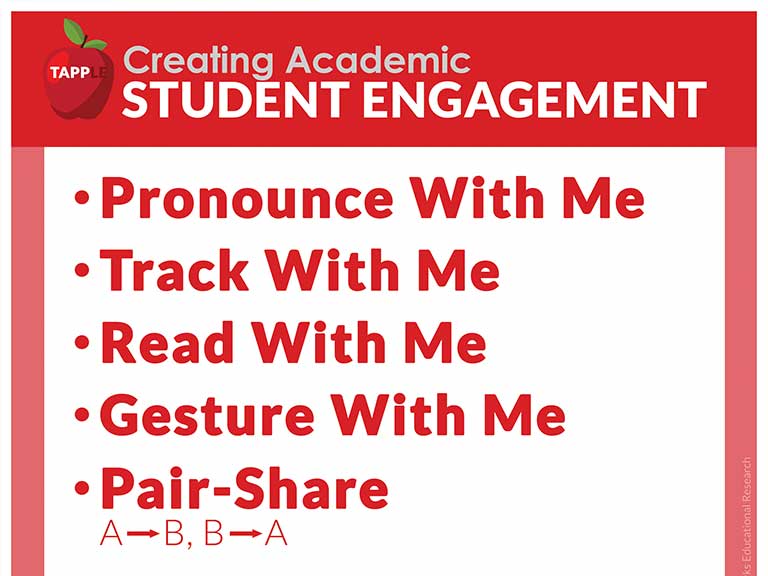
Engagement Norms
This poster has all of the DataWORKS Student Engagement Norms that we advocate. These should be used with all of our lessons
Share This Lesson
Subtract Integers (Sign Rules)
This number sense lesson focuses on subtracting integers. The lesson includes research-based strategies and strategic questions that prepare students for assessments. In this lesson, students read the problem and change the subtraction problem to add the opposite. Then, they use the given addition integer rules to solve, identifying whether the answer has the same sign or different sign. In addition to the lesson, there are four pages of Independent Practice and review with questions modeled after current adaptive testing items.
Share This Lesson
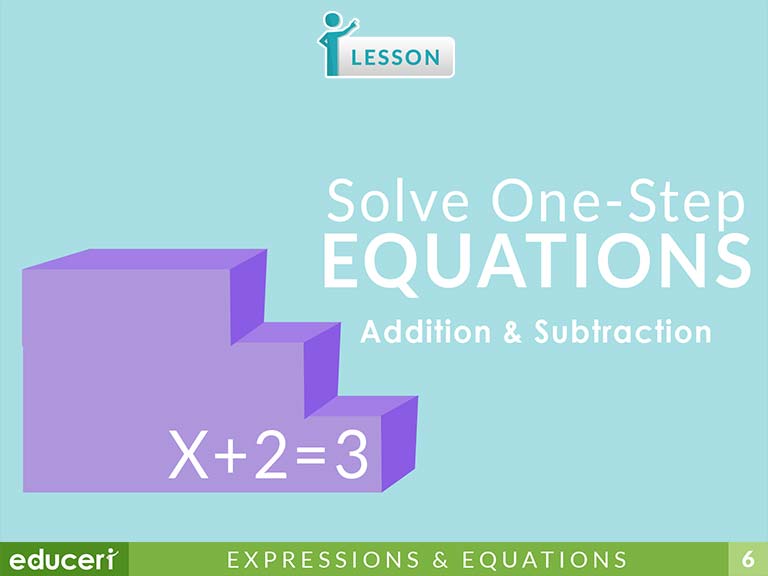
Solve One-Step Equations (Addition & Subtraction)
6.EE.5 Understand solving an equation or inequality as a process of answering a question: which values from a specified set, if any, make the equation or inequality true? Use substitution to determine whether a given number in a specified set makes an equation or inequality true.
6.EE.66.EE.6 Use variables to represent numbers and write expressions when solving a real-world or mathematical problem; understand that a variable can represent an unknown number, or, depending on the purpose at hand, any number in a specified set.
6.EE.76.EE.7 Solve real-world and mathematical problems by writing and solving equations of the form x + p = q and px = q for cases in which p, q and x are all nonnegative rational numbers.
Share This Lesson
Multiply & Divide Integers
7.NS.2 Apply and extend previous understandings of multiplication and division and of fractions to multiply and divide rational numbers.
7.NS.2.A7.NS.2.A Understand that multiplication is extended from fractions to rational numbers by requiring that operations continue to satisfy the properties of operations, particularly the distributive property, leading to products such as (-1)(-1) = 1 and the rules for multiplying signed numbers. Interpret products of rational numbers by describing real-world contexts.
7.NS.2.B7.NS.2.B Understand that integers can be divided, provided that the divisor is not zero, and every quotient of integers (with non-zero divisor) is a rational number. If p and q are integers, then -(p/q) = (-p)/q = p/(-q). Interpret quotients of rational numbers by describing real-world contexts.
7.NS.2.C7.NS.2.C Apply properties of operations as strategies to multiply and divide rational numbers.
Share This Lesson
Solve One-Step Equations (Multiplication & Division)
6.EE.5 Understand solving an equation or inequality as a process of answering a question: which values from a specified set, if any, make the equation or inequality true? Use substitution to determine whether a given number in a specified set makes an equation or inequality true.
6.EE.66.EE.6 Use variables to represent numbers and write expressions when solving a real-world or mathematical problem; understand that a variable can represent an unknown number, or, depending on the purpose at hand, any number in a specified set.
6.EE.76.EE.7 Solve real-world and mathematical problems by writing and solving equations of the form x + p = q and px = q for cases in which p, q and x are all nonnegative rational numbers.
Share This Lesson
Solve Two-Step Equations
7.EE.4 Use variables to represent quantities in a real-world or mathematical problem, and construct simple equations and inequalities to solve problems by reasoning about the quantities.
7.EE.4.A7.EE.4.A Solve word problems leading to equations of the form px + q = r and p(x + q) = r, where p, q, and r are specific rational numbers. Solve equations of these forms fluently. Compare an algebraic solution to an arithmetic solution, identifying the sequence of the operations used in each approach. For example, the perimeter of a rectangle is 54 cm. Its length is 6 cm. What is its width?