Lessons tagged with "objects"
Count Objects 100-120
- Grade:
- 1
- Subject:
- Math
This number and operations in base ten lesson covers how to count objects from 100 to 120. The lesson includes research-based strategies and strategic questions that prepare students for assessments. In this lesson, students will read sentences that describe a specific number of objects in a group. Then, they will count on from that total to add a certain number more.
Measure the Length of an Object to the Nearest Inch
- Grade:
- 2
- Subject:
- Math
This measurement and data lesson focuses on measuring the length of an object to the nearest inch. The lesson includes research-based strategies and questions that help prepare students for assessments. In this lesson, students line up the zero mark on the ruler with the object. Then, then find the length of the object by counting the inches to the nearest inch. Finally, they record the length and read the sentence. In addition to the lesson, there are eight pages of Independent Practice and review with questions modeled after current adaptive testing items.
Use Arrays (Addition)
- Grade:
- 2
- Subject:
- Math
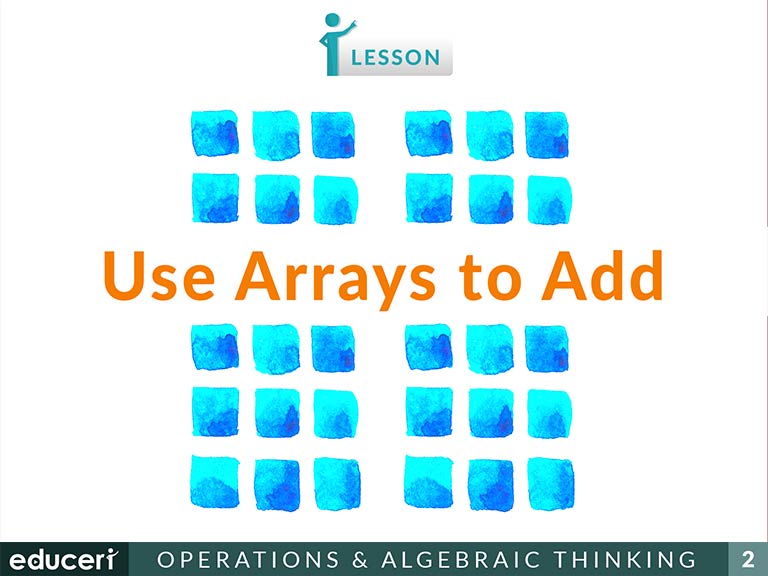
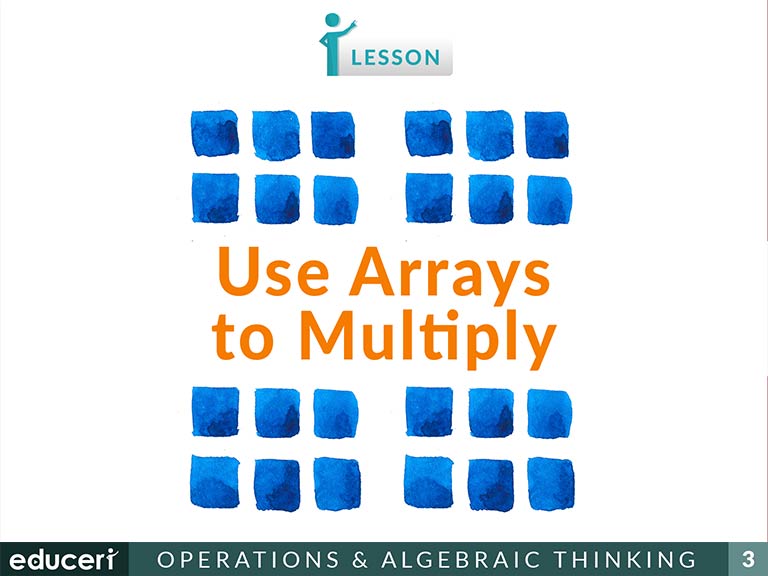
This number sense lesson focuses on using arrays to multiply. The lesson includes research-based strategies and questions that help prepare students for assessments. In this lesson, students complete the number sentence. Then, they use the first number to find the array that has the matching number of rows, and the second number to find the array that has the matching number of columns. Finally, students select the correct array, count the number of objects, and read the number sentence. In addition to the lesson, there are eight pages of Independent Practice and review with questions modeled after current adaptive testing items.
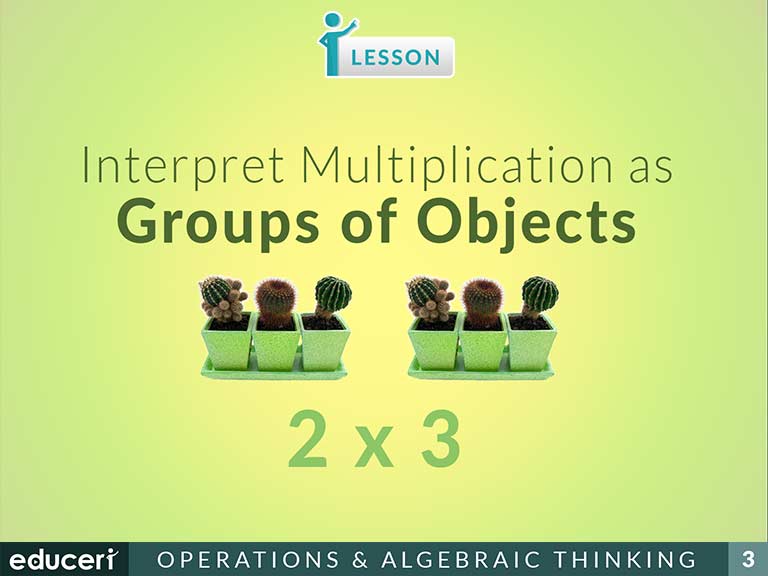
Interpret Multiplication as Groups of Objects
- Grade:
- 3
- Subject:
- Math
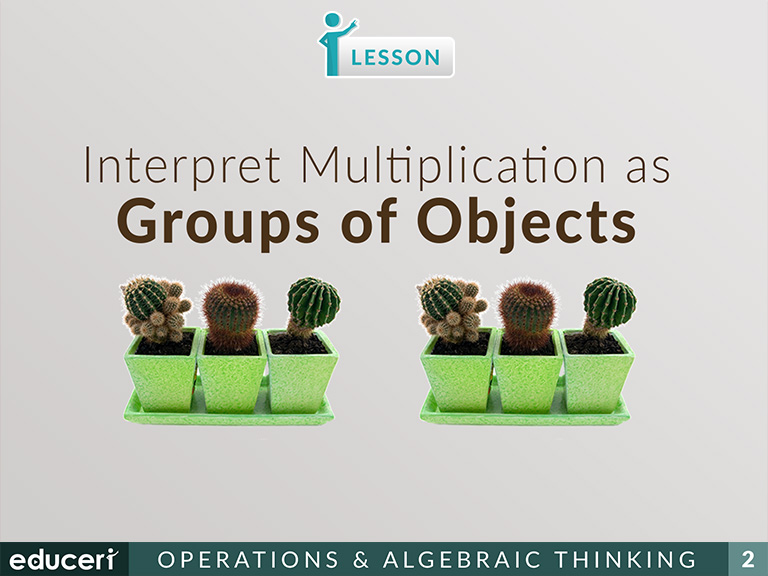
This operations and algebraic thinking lesson covers how to interpret multiplication as repeated addition of groups of equal amounts. The lesson includes research-based strategies and strategic questions that prepare students for assessments. In this lesson, students will examine word and picture problems to determine the number of groups and amount in each group. Then, they will select or create which situation can be solved using given multiplication statements.
Add Numbers (Sum of 10)
- Grade:
- K
- Subject:
- Math
This number sense lesson focuses on showing the meaning of adding. The lesson includes research-based strategies and questions that help prepare students for assessments. In this lesson, students count and write the number of objects in each group, and put them together to show the meaning of adding. Then, they write the total amount and read the problem aloud. In addition to the lesson, there are four pages of Independent Practice and review with questions modeled after current adaptive testing items.
Identify Which Set Has Less Than
- Grade:
- K
- Subject:
- Math
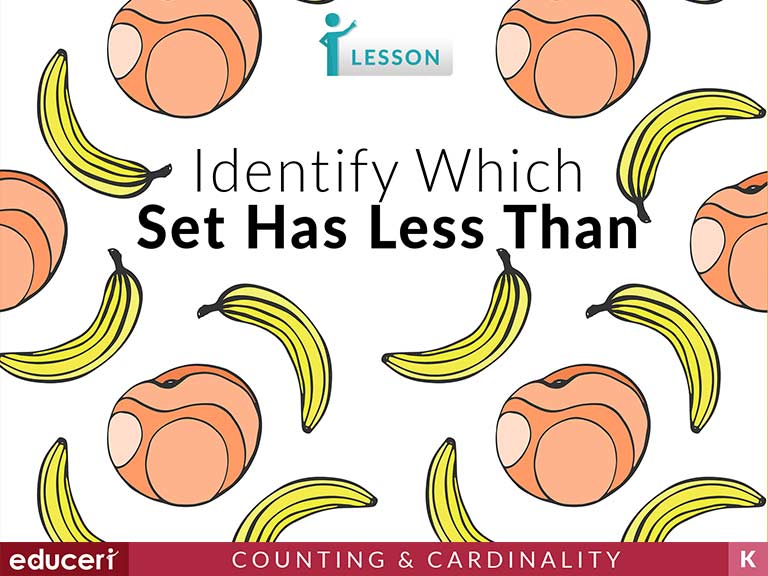
This number sense lesson focuses on identifying which set has less than. The lesson includes research-based strategies and strategic questions that prepare students for assessments. In this lesson, the students count each set in a pair and write the numbers. Then, they identify which set has less than and explain why. In addition to the lesson, there are four pages of Independent Practice and review modeled on current adaptive testing items.


Rotation Stations (Two-Syllable Words & Other Activities)
- Grade:
- Subject:
- English Language Development
Answer What, Why, and How Questions in a Story
- Grade:
- Subject:
- English Language Development
This lesson provides teachers with a great way to teach What, Why, and How Questions. Resources include a nice handout, and whiteboards are recommended.
Describe the Relationship Between Illustrations and Text
- Grade:
- Subject:
- English Language Development
Rotation Stations (Two-Syllable Words with Prefixes and Suffixes & Other Activities)
- Grade:
- Subject:
- English Language Development