
All Lessons
Share This Lesson
Answer Questions Using an Inference
Share This Lesson
Write an Explanatory Text
This writing lesson covers how to write explanatory text. The lesson includes research-based strategies and strategic questions that prepare students for assessments. In this lesson, students write sentences that describe each of several steps. Then, they use an editing checklist to identify and correct any errors. In addition to the lesson, there are four pages of topics for review and extended thinking.
Share This Lesson
Share This Lesson
Share This Lesson
Recall Information from Experiences
Share This Lesson

Gather Information from Sources
Share This Lesson
Strengthen Informative Writing by Revising
W.1.2 Write informative/explanatory texts in which they name a topic, supply some facts about the topic, and provide some sense of closure.
W.1.5W.1.5 With guidance and support from adults, focus on a topic, respond to questions and suggestions from peers, and add details to strengthen writing as needed.
Share This Lesson
Use Digital Tools to Produce and Publish Writing
Share This Lesson
Produce Complete Sentences Orally
Share This Lesson
Share This Lesson
Share This Lesson
Share This Lesson
Answer Questions about What a Speaker Says
Share This Lesson
Share This Lesson
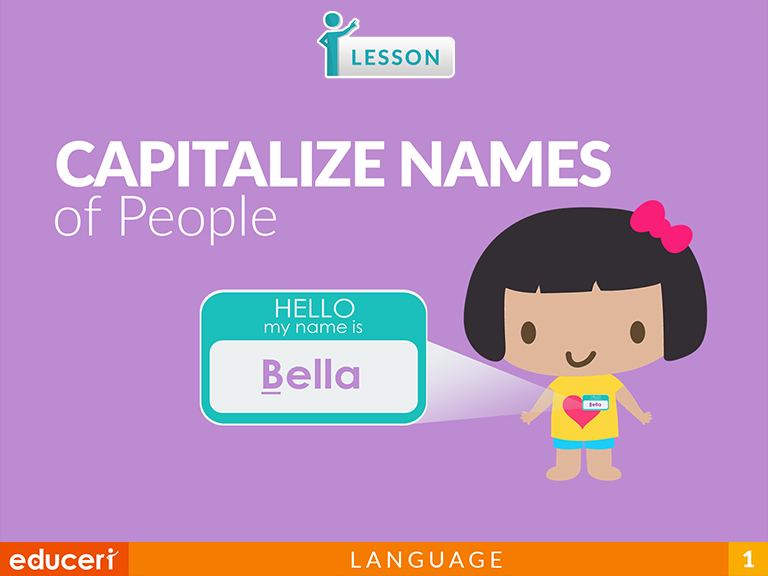
Capitalize Names of People
This writing conventions lesson focuses on capitalizing names of people. The lesson includes research-based strategies and questions that help prepare students for assessments. This lesson practices using uppercase letters as a rule when writing people's names. In addition to the lesson, there are four pages of Independent Practice and review with questions modeled after current adaptive testing items.
Share This Lesson
Use Commas in a Series
This writing conventions lesson focuses on using commas to separate items in a series. The lesson includes research-based strategies and strategic questions that prepare students for assessments. In this lesson, students identify a series of items in a sentence and insert commas. In addition to the lesson, there are four pages of Independent Practice and review with questions modeled after current adaptive testing items.
Share This Lesson
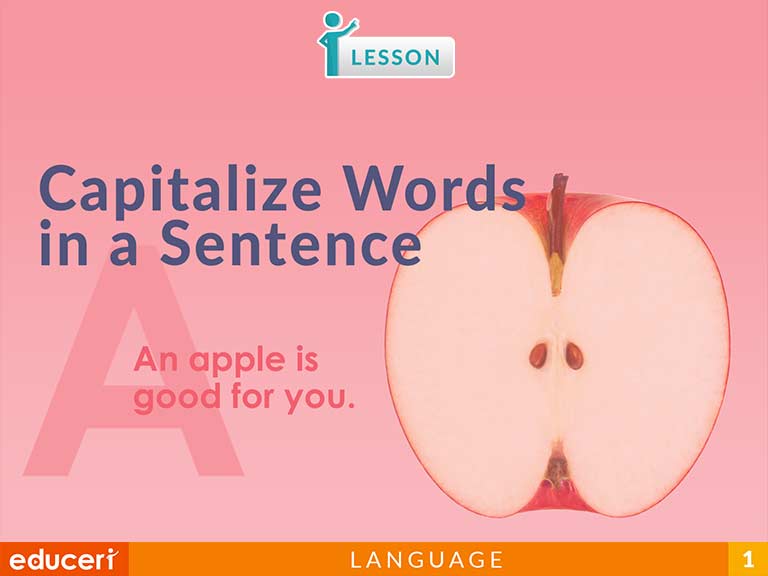
Capitalize Words in a Sentence
This writing conventions lesson focuses on capitalizing words in a sentence. The lesson includes research-based strategies and strategic questions that prepare students for assessments. In this lesson, students identify proper nouns, months and days of the year, and the first word of a sentence to capitalize. In addition to the lesson, there are four pages of Independent Practice and review with questions modeled after current adaptive testing items.
Share This Lesson
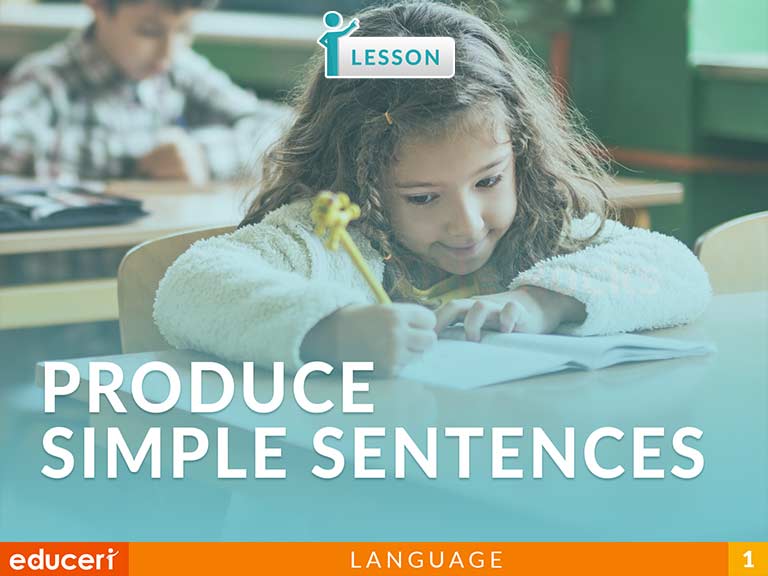
Produce Simple Sentences
This Language lesson requires students to identify and produce simple sentences on given topics. The lesson includes research-based strategies and strategic questions that prepare students for assessments.
Share This Lesson
Identify and Use Demonstrative Pronouns
This language lesson has students identify and use demonstrative pronouns. Students should complete subjective and objective pronoun lessons prior to completing this lesson.