All Lessons
Share This Lesson
Isolate initial sounds (H, Y, W, Z)
Share This Lesson
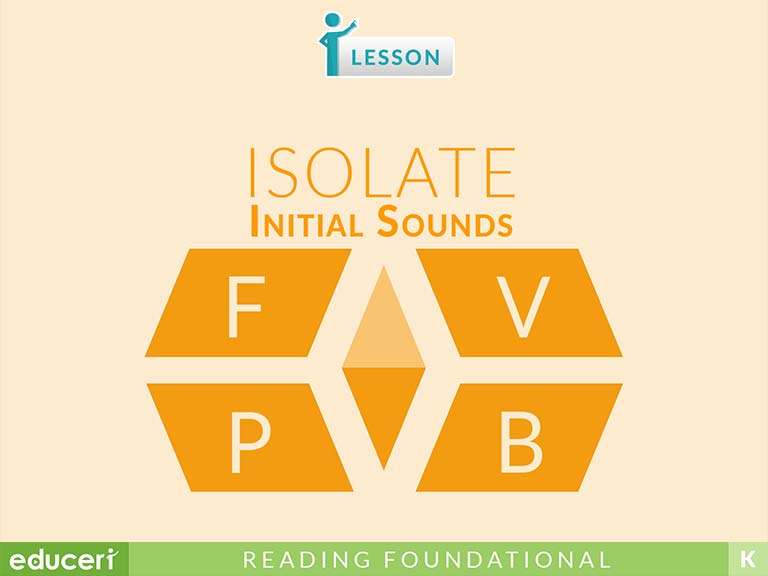
Isolate Initial Sounds F, V, P, B
This phonics lesson involves isolating initial sounds in words. The lesson includes research-based strategies and strategic questions that prepare students for assessments. In this lesson, students will practice isolating and pronouncing initial sounds (phonemes) in spoken single-syllable words. Flashcards are provided as an extra resource.
Share This Lesson
Isolate Initial Sounds M, N, L, R
RF.K.2 Demonstrate understanding of spoken words, syllables, and sounds (phonemes).
RF.K.2.DRF.K.2.D Isolate and pronounce the initial, medial vowel, and final sounds (phonemes) in three-phoneme (consonant-vowel-consonant, or CVC) words. (This does not include CVCs ending with /l/, /r/, or /x/.)
This phonics lesson involves isolating initial sounds in words. The lesson includes research-based strategies and strategic questions that prepare students for assessments. In this lesson, students will practice isolating and pronouncing initial sounds (phonemes) in spoken single-syllable words. Flashcards are provided as an extra resource.
Share This Lesson
Isolate Initial Sounds S, SH, CH, J
RF.K.2 Demonstrate understanding of spoken words, syllables, and sounds (phonemes).
RF.K.2.DRF.K.2.D Isolate and pronounce the initial, medial vowel, and final sounds (phonemes) in three-phoneme (consonant-vowel-consonant, or CVC) words. (This does not include CVCs ending with /l/, /r/, or /x/.)
This phonics lesson is focused on segmenting single-syllable words into phonemes. The lesson includes research-based strategies and strategic questions that prepare students for assessments. Lesson covers the following sound /s/, /sh/, /ch/, and /j/. Flashcards for initial sounds are provided in a separate file.
Share This Lesson
Isolate Initial Sounds T, D, K, G
Share This Lesson
Isolate Final Sounds
RF.K.2 Demonstrate understanding of spoken words, syllables, and sounds (phonemes).
RF.K.2.DRF.K.2.D Isolate and pronounce the initial, medial vowel, and final sounds (phonemes) in three-phoneme (consonant-vowel-consonant, or CVC) words. (This does not include CVCs ending with /l/, /r/, or /x/.)
Share This Lesson
Read High-Frequency Words
This phonics and word recognition lesson includes research-based strategies and strategic questions that prepare students for assessments. This lesson provides mini-concepts and skill developments for 24 high-frequency words. The words have been separated into groups of 3 and the order they are taught is at the discretion of the teacher. An extra practice table of high-frequency words is available in a separate file.
Share This Lesson
Share This Lesson
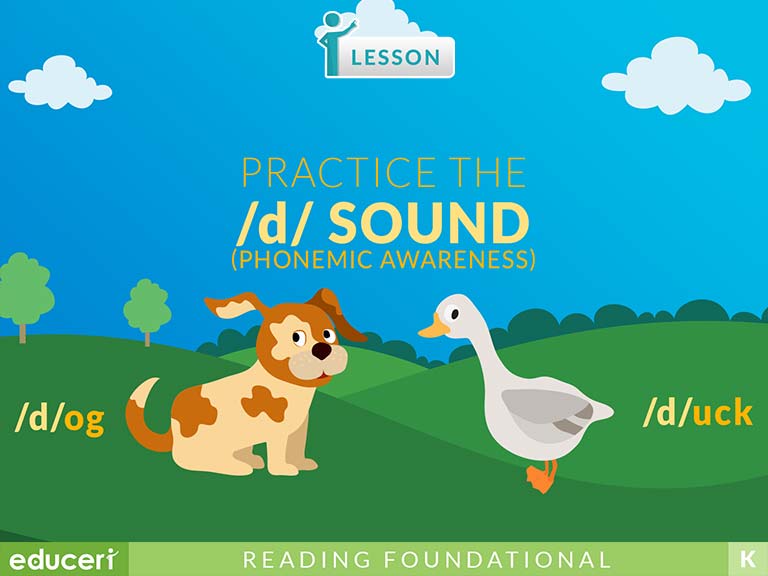
Practice the d Sound
This Lesson is a part of the Launch to Literacy Program.
Share This Lesson
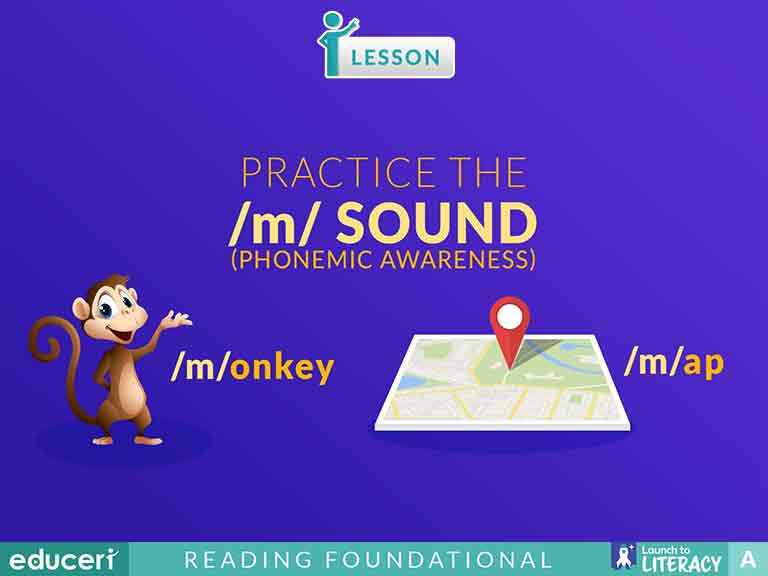
Practice the m sound
This lesson is a part of the Launch to Literacy program.
Share This Lesson
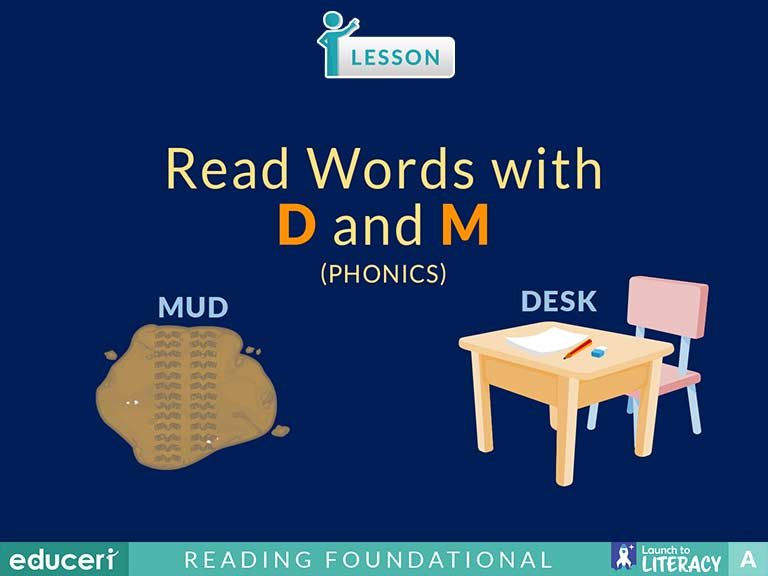
Read Words with D and M
This lesson is a part of the Launch to Literacy program.
Share This Lesson
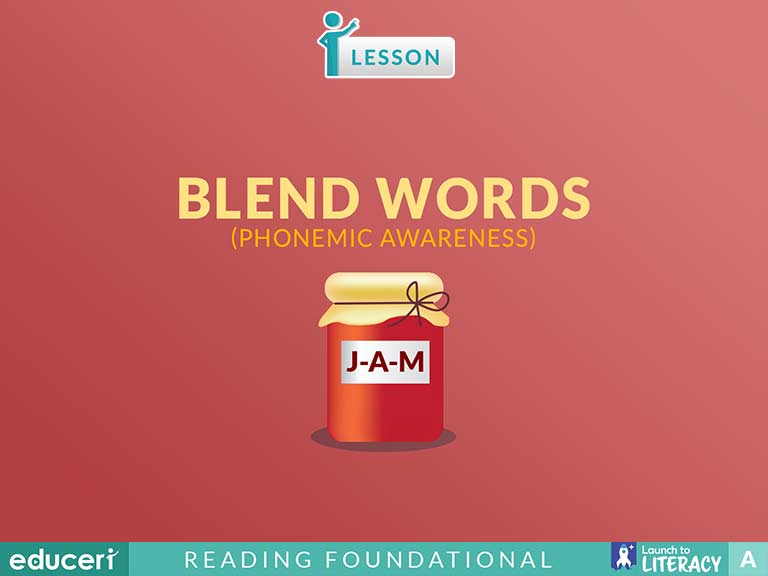
Blend Words
This lesson is a part of the Launch to Literacy Program.
Share This Lesson
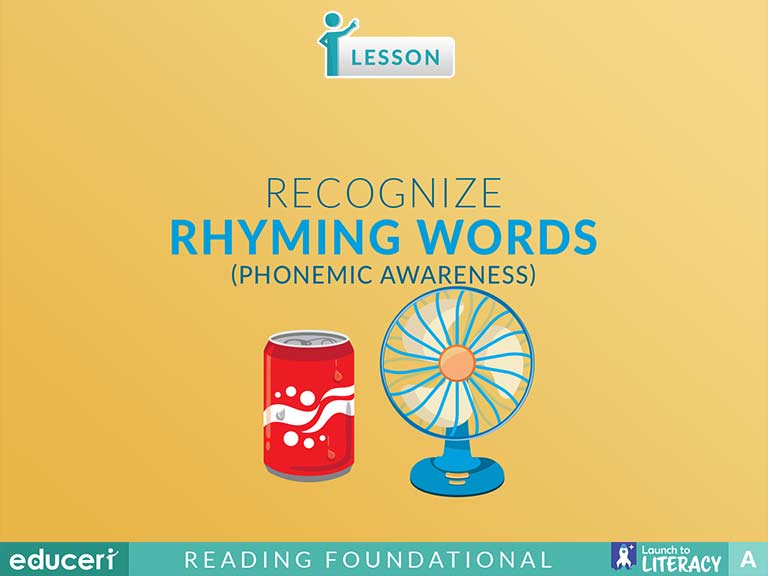
Recognize Rhyming Words
This lesson is a part of the Launch to Literacy Program.
Share This Lesson
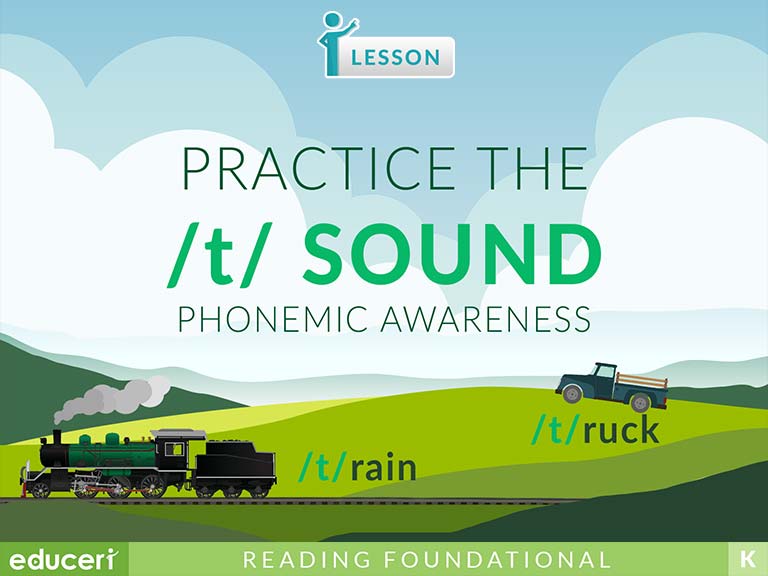
Practice the t sound
This lesson is a part of the Launch to Literacy Program.
Share This Lesson
Name Letters of the Alphabet
Share This Lesson
Share This Lesson
Follow Words on a Page
Share This Lesson
Identify Parts of a Book
Share This Lesson